

Why do I snore? Common causes and what you can check
Snoring happens when air moving through the nose, mouth or throat makes relaxed tissues vibrate during sleep. Sleeping on your back, excess weight, smoking and drinking too much alcohol can make it more likely [1]. A recording can confirm a sound occurred, but it cannot establish which factor caused it or rule out a sleep disorder.
Last reviewed 22 October 2026. General information, not medical advice.
On this page6 sections
What makes the snoring sound?
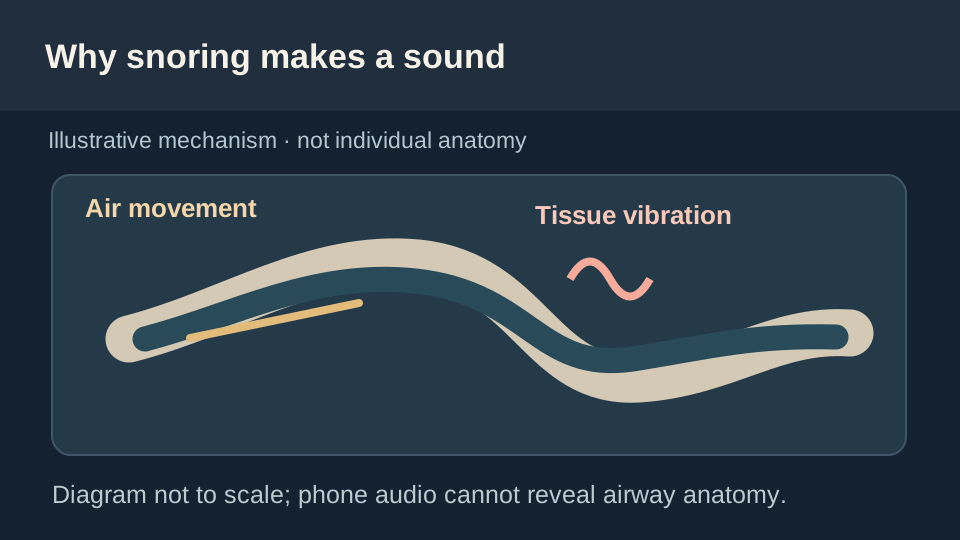
As you sleep, tissues around the upper airway relax and its opening can narrow. Airflow may make those tissues vibrate, producing snoring [1]. This is a simplified mechanism, not a picture of your particular airway.
Snoring does not automatically mean sleep apnea, and a loud recording cannot measure oxygen levels, airflow, or whether a breathing disorder is present. For those distinctions, read snoring or sleep apnea.
Common contributors to consider
The NHS identifies several factors associated with snoring [1]. More than one may apply on the same night, so do not assume a recorded difference identifies a cause.
- Sleeping on your back can make airway narrowing more likely.
- Alcohol can contribute to relaxation of the tissues around the airway, especially after drinking heavily.
- Excess body weight is a recognised contributor for some people.
- Smoking is another associated factor.
- Nasal congestion can accompany snoring. A persistent blocked nose, medication questions, or allergy symptoms deserve individual advice rather than an automatic remedy.
How to compare possible causes without jumping to conclusions
If you noticed a change, first ask whether the sound changed or whether you simply recorded it differently. Moving the microphone nearer to the bed, changing its angle or having a quieter room can change the apparent loudness even if the sleeper's airway has not changed.
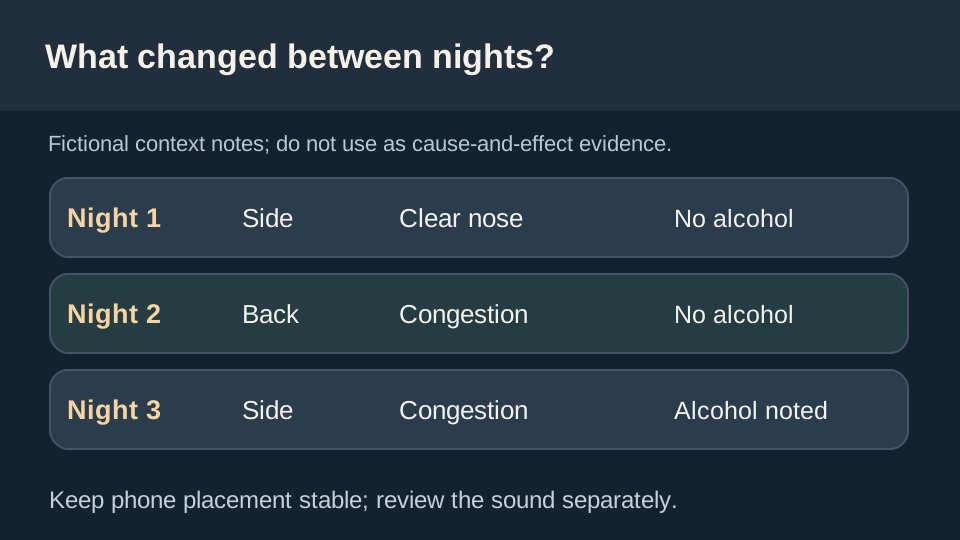
Over a few ordinary nights, separate what you noticed from what might explain it. For example, 'likely snoring audible at 02:10; phone on the right nightstand' is an observation. 'My blocked nose caused that snore' is an unproven explanation. Use the same placement where practical, and do not change several habits merely to produce a convincing graph.
- Record the context: date, general sleep position if known, congestion, alcohol, other bedroom sounds and phone position.
- Replay before labelling: note what can actually be heard, including unclear clips and gaps where recording did not occur.
- Look for repeat observations: patterns across a few nights can guide questions, but they are not proof that any one factor caused or treated snoring.
- Act on symptoms, not the chart: witnessed breathing pauses, gasping or significant daytime sleepiness warrant medical assessment regardless of a recording [1].
Use the seven-night sleep diary if you prefer a ready-made template, or read how to check whether you snore before comparing possible contributors.
Why snoring may change from night to night
Some circumstances vary from one night to the next. A cold, bedtime alcohol, sleep position, a different room, or microphone placement can change what is recorded. Comparison is most useful when you keep the phone in a similar place and log changes rather than trying to prove a treatment worked.
If you need a practical way to capture the sounds, follow how to record yourself sleeping. To check whether you are hearing snoring at all, start with do I snore?.
What a microphone can tell you, and what it cannot
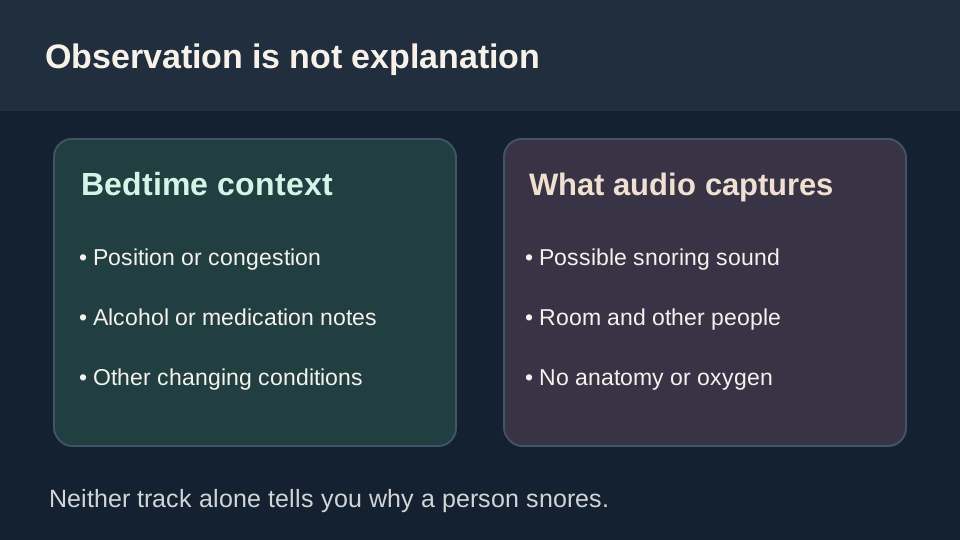
A phone can capture audible events for listening and comparison. The recording does not measure the structure of your airway, the actual sleep stages, blood oxygen, or the cause of a breathing pause. It may also capture a partner, pet, fan or passing traffic.
Use these as separate questions: What did the room microphone record? and What medical explanation, if any, is appropriate? The second cannot be answered by sound alone.
When to seek medical advice
The NHS snoring advice recommends seeing a GP if snoring does not improve with self-care, seriously affects daily life, or comes with daytime sleepiness, witnessed breathing interruptions, choking or gasping [1].
If you notice those signs, discuss them with a clinician rather than waiting for more app data [2]. For general self-care options, see how to stop snoring.
In the app
Listen to your nights without guessing at a diagnosis
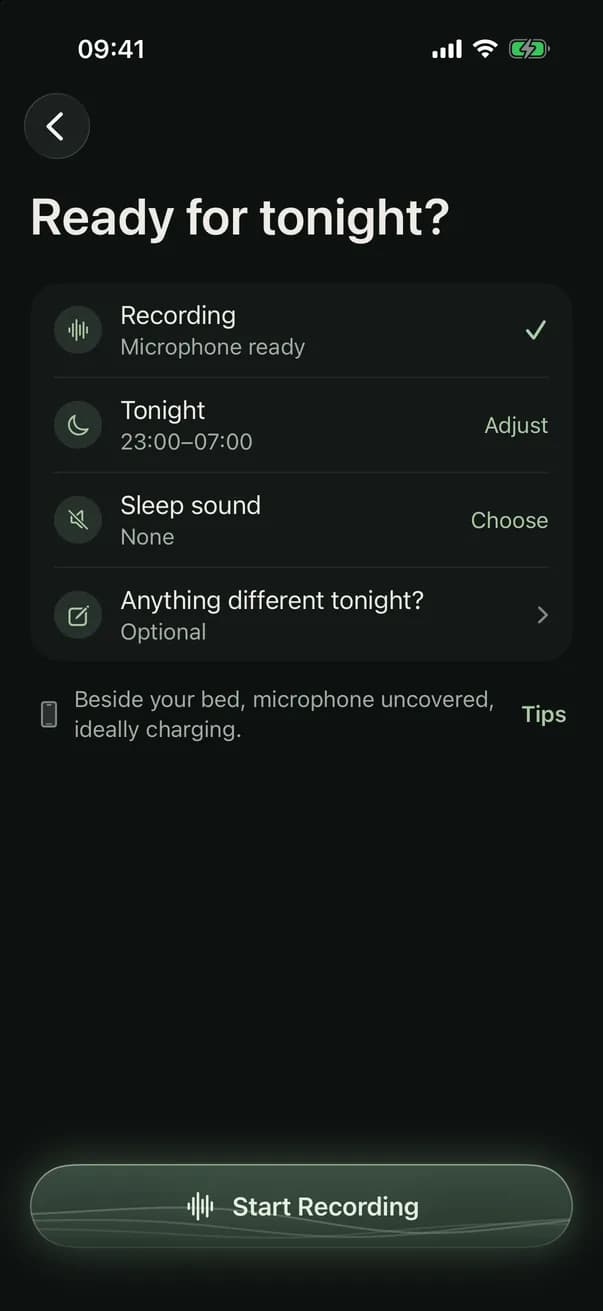
With a subscription, the app lets you review captured sounds and compare nights. Add contextual notes, listen to the clips and treat the results as personal observations, not a cause-and-effect test or medical assessment.

Questions
Why do I suddenly snore?
A recent change in congestion, sleep position, alcohol, weight or other factors may be relevant, but these are not proof of a cause. Discuss new or troublesome snoring with a clinician, especially with gasping or daytime sleepiness [1].
Why do I snore on some nights but not others?
Conditions and microphone placement can differ from night to night. Compare several ordinary nights, note changes and avoid assuming a particular factor explains the sound.
Does recording snoring tell me whether I have sleep apnea?
No. A recording can provide sound clips, but it cannot diagnose or rule out sleep apnea. Breathing pauses, gasping and excessive daytime sleepiness deserve medical evaluation [1].