

Do I snore? Three ways to find out
You may snore without noticing because the sound happens while you are asleep. Ask someone who hears you at night, record and replay a few sleep clips with permission, or keep a short multi-night observation log. No single night proves how often you snore, and snoring audio cannot diagnose or exclude sleep apnea.
Last reviewed 22 October 2026. General information, not medical advice.
On this page5 sections
Three practical ways to check for snoring
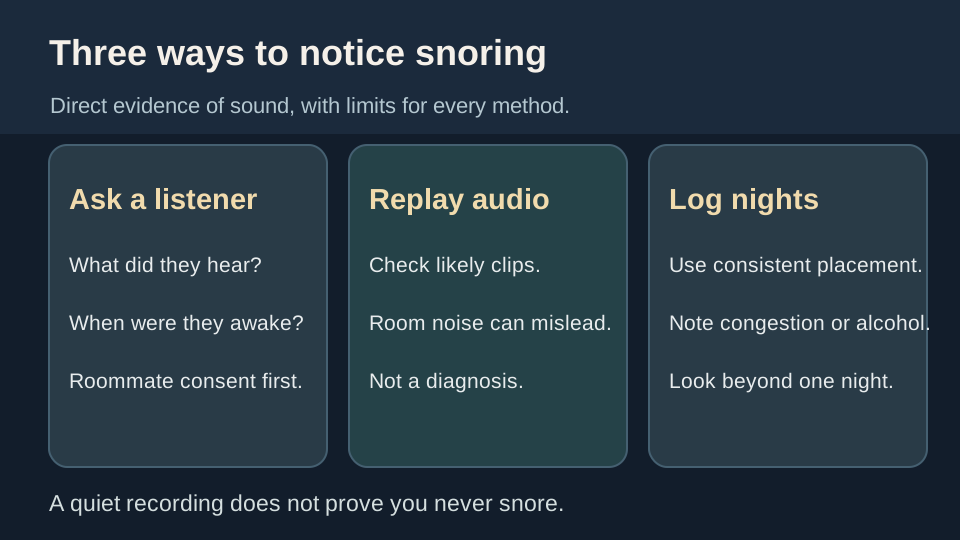
Begin with what you can observe rather than guessing from a dry mouth or tired morning. A partner's description, a recording and a repeat-night log answer slightly different questions.
- Ask a partner or housemate whether they heard a snore, and about when. Their observation is limited to when they were awake.
- Record one ordinary night and replay likely sound clips; check whether the sound may have come from someone else or the room.
- Repeat across several nights and note congestion, alcohol, sleep position and any change in phone placement.
How to record and review a night on iPhone
Set the phone on a stable bedside surface with the microphone clear, start recording, and check the result after waking. Follow the practical iPhone recording walkthrough for microphone, storage and safe charging details.
Listen before accepting an automatic sound label: snoring, breathing, other people's voices, pets and bedroom noise can overlap. The label is not a clinical conclusion. If the main question is why you snore, keep notes about possible contributors rather than attributing changes to one cause.
When a clip is unclear or sounds like someone else
Treat the app label as a place to start listening. Replay the surrounding moment, if available, to hear whether it is a possible snore, speech, a fan, a pet or another bedroom sound. Room audio cannot reliably tell which person produced a sound, how intense it would be at the sleeper's airway, or whether breathing was interrupted.
A short or silent clip may also reflect blocked microphone access, different phone placement or an interval that was never recorded. Check the recording setup and missing-audio guidance before concluding the sound was absent.
- Can you actually hear the event? If not, record that the clip is uncertain rather than counting a confirmed snore.
- Could it be another sound source? Note other people, pets, a fan and traffic without guessing who made the sound.
- Was the night captured? Check the recording coverage and any missing intervals before interpreting quiet audio.
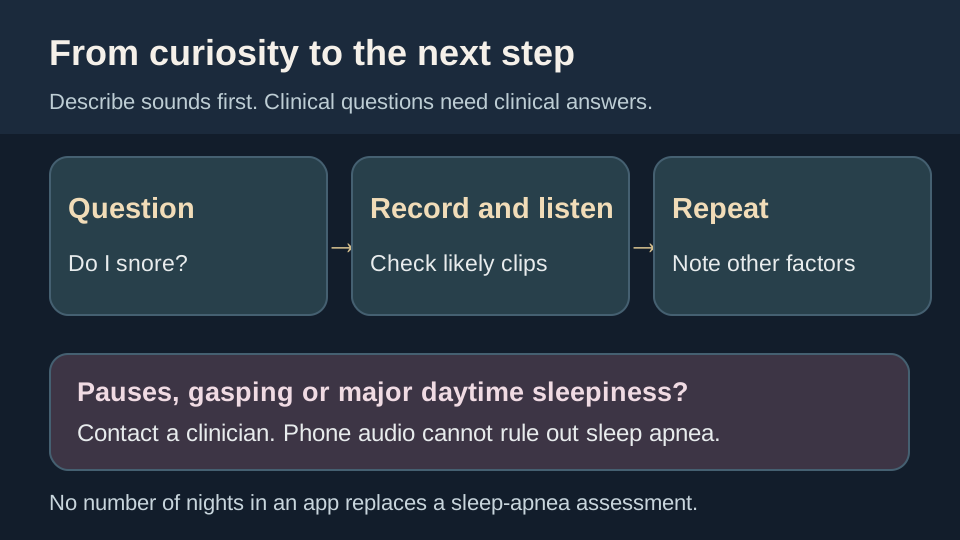
- Would symptoms change your next step? Witnessed pauses, gasping or troublesome daytime sleepiness deserve clinical advice, regardless of what a clip seems to show [1].
What to note after each night
Use a simple log with date, whether you heard likely snoring on playback, any partner notes, changes in the room and how rested you felt. Keep descriptions factual. A very short or silent recording could reflect a microphone problem, not an absence of snoring. The reusable seven-night sleep diary works without treating a sound label as a diagnosis.
If your goal is to compare patterns over time, log similar nights and revisit the sounds. Recording with an iPhone explains how to keep placement consistent.
When the question needs medical advice
Snoring is common; the ENT Health patient guide reports it in nearly half of adults, while frequency varies [2]. Frequency alone does not tell you whether a breathing disorder is present.
If anyone has noticed breathing pauses, choking or gasping, or you are very sleepy during the day, talk to a clinician [1]. Do not postpone that conversation to collect a perfect recording. The snoring or sleep apnea guide explains the diagnostic boundary.
In the app
Hear your own night
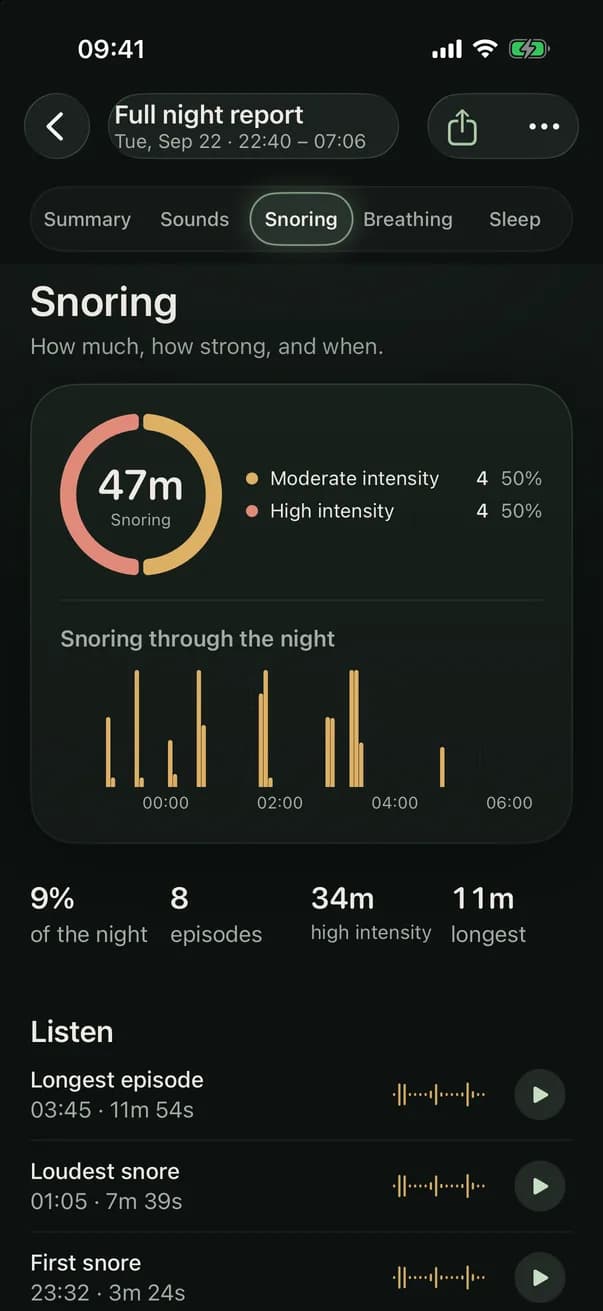
With a subscription, the app can record sounds and present likely events for playback in the morning. Listen to the clips and compare a few ordinary nights. It cannot identify a person from sound, or diagnose a medical condition.

Questions
Can I tell if I snore when I sleep alone?
Yes, you can make an audio recording and listen back. A few nights are more informative than one, and no phone microphone can tell whether snoring indicates sleep apnea.
Does waking with a dry mouth mean I snore?
No. It may prompt you to ask about your sleep, but is not proof. A partner's observation or a clearly audible recording is more direct evidence of sound.
How many nights should I check?
Try a few ordinary nights to see whether the sound is repeated, while keeping microphone placement consistent. No number of app recordings can rule out a sleep disorder.