Do I talk in my sleep? Sleep talking, explained
Probably, at least sometimes. In a survey of 1,000 Norwegian adults, two in three (66.8%) said they had talked in their sleep at some point in their life, and 17.7% had done so in the previous three months [1]. It's usually harmless. The easiest way to know whether you do is to record a night.
Last reviewed 24 September 2026. General information from the Snorezy team, not medical advice.
What sleep talking is
Sleep talking (somniloquy) is speech or other vocal sounds during sleep, from mumbling and single words to laughing or whole sentences. You won't remember it.
Can you understand what people say?
Sometimes. Often it's mumbled or fragmentary. Treat anything said in sleep as noise from a sleeping brain, not as a message.
When it's worth mentioning to a doctor
Talking alone is rarely a concern. Mention it to a doctor if it comes with:
- shouting while moving, hitting out or acting out a dream;
- sleepwalking, or injuring yourself or a partner at night;
- a sudden change in your sleep, or real daytime sleepiness.
In Snorezy
Hear it for yourself
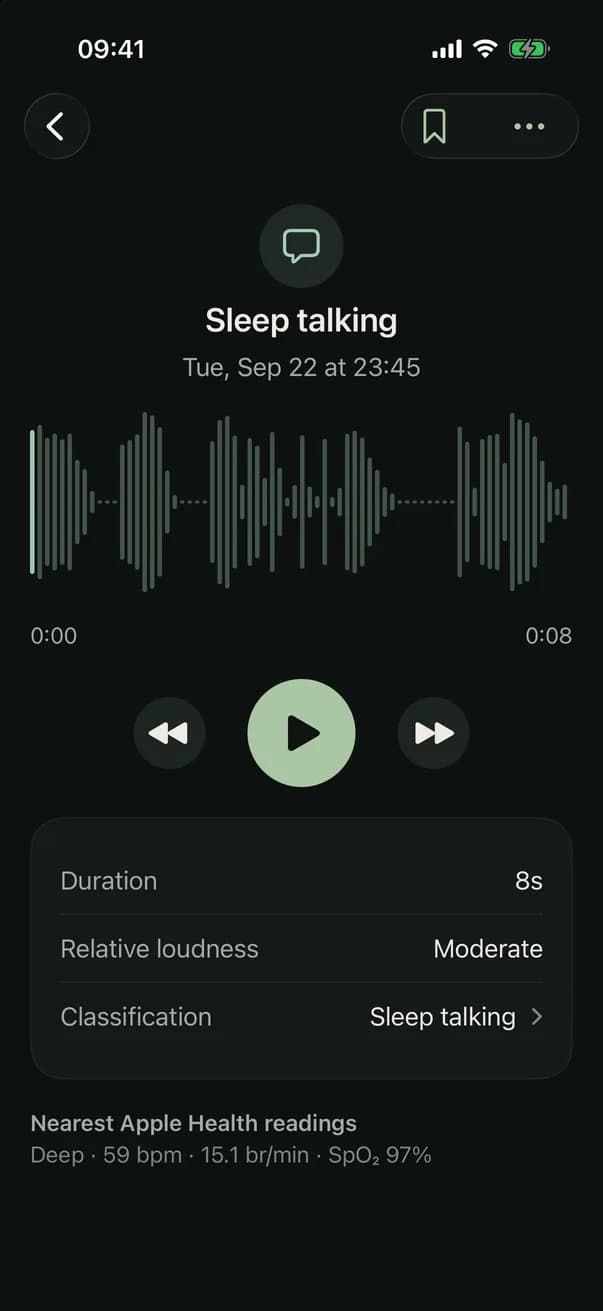
Snorezy picks out sleep talking and laughing from the rest of the night and keeps each moment as a short clip. The report highlights the longest one, and the Sounds list filters to talking so you can play them in order.
Snorezy doesn't transcribe speech. You hear it, and nothing is written down.