Alcohol and sleep: why a drink costs you the second half of the night
Alcohol helps you fall asleep faster and makes the first half of the night deeper, then disrupts the second half [1]. It also delays your first REM sleep and, in larger amounts, reduces REM overall [1]. And it makes snoring more likely [2].
Last reviewed 24 September 2026. General information from the Snorezy team, not medical advice.
What alcohol does to a night
A 2013 review of the research on alcohol and sleep in healthy people found that, at every dose [1]:
- you fall asleep faster;
- the first half of the night is more consolidated, with more deep sleep;
- the second half is more disrupted;
- the first REM period comes later.
At moderate and high doses, total REM sleep across the night is reduced [1].
Why you wake up after drinking
That second-half disruption is the early-morning waking many people recognise after an evening out: asleep easily, then awake at 4 a.m. and unable to get back to sleep.
Alcohol and snoring
Alcohol relaxes the muscles that hold your airway open, and drinking too much is one of the things the NHS lists as making snoring more likely [2]. For people with sleep apnea it can make breathing interruptions worse. Limiting alcohol in the evening is on the NHS self-help list for snoring [2].
In Snorezy
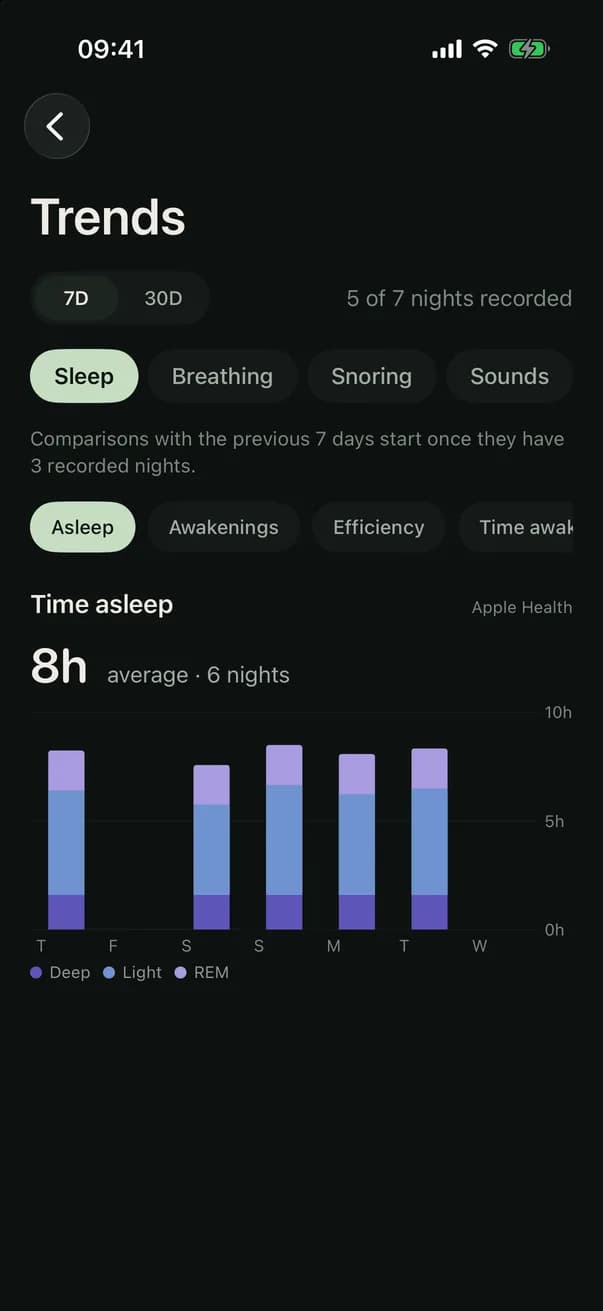
Compare your own nights
Note alcohol in "Anything different tonight?" before you sleep. After a few nights, Snorezy compares your snoring and your Apple Health sleep on those nights against the rest, and says how many nights it's based on. It's a pattern in your own nights, not proof of a cause.