My child snores: when to mention it, and what to bring
Mention it to your child's doctor. The American Academy of Pediatrics recommends that all children and teenagers be screened for snoring, and that a child who snores and has other signs of sleep apnea be evaluated properly [1]. In children, enlarged tonsils and adenoids are a common reason [1].
Last reviewed 24 September 2026. General information from the Snorezy team, not medical advice.
Why paediatricians ask about snoring
Sleep apnea in children usually looks different from adults. It's most often linked to enlarged tonsils and adenoids, and sometimes to weight [1]. Snoring is the sign that starts the conversation, which is why the recommendation is to ask about it at all [1].
Things worth noting before the appointment
Write down what you've noticed, with dates if you can:
- how many nights a week they snore;
- whether you've seen pauses in breathing, gasping or snorting;
- unusual sleeping positions or restless sleep;
- daytime tiredness, or trouble concentrating at school.
How it's diagnosed
If the doctor suspects sleep apnea, the recommended test is an overnight sleep study (polysomnography) [1]. A recording from home isn't a test, but it can help you describe what you've heard.
In Snorezy
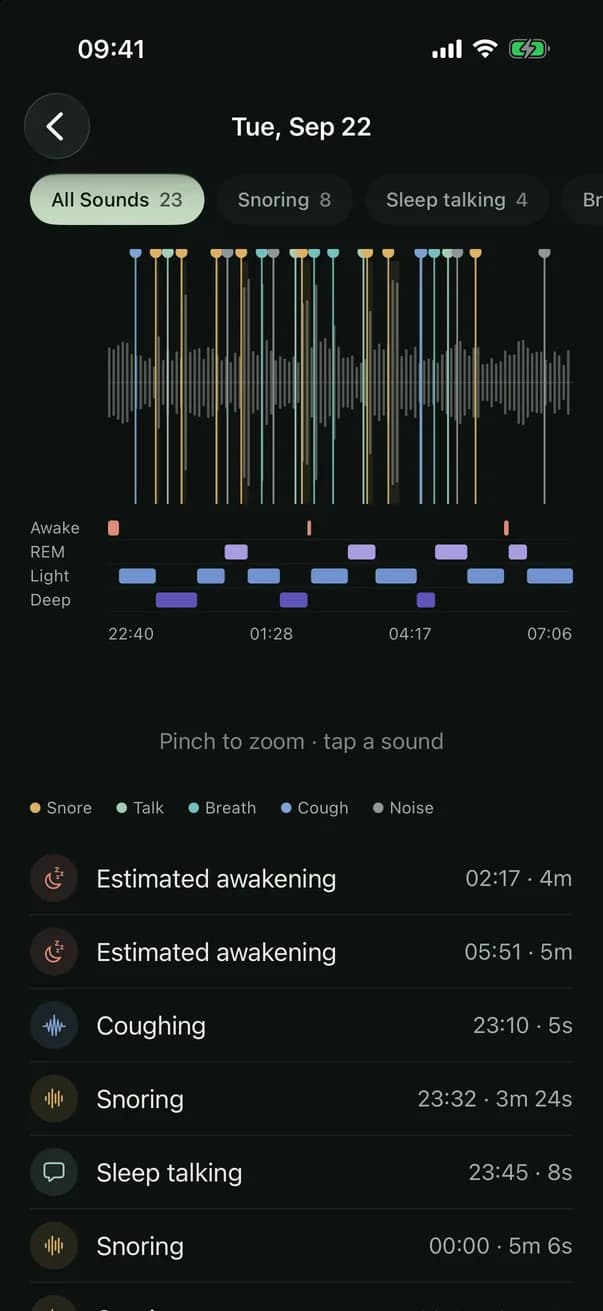
A recording to play to the doctor
If you record in your child's room, Snorezy picks out the snoring and breathing sounds so you can play the relevant moments rather than describe them. The recording is kept on your iPhone. Snorezy doesn't assess children, or anyone.